Core Differences Between Laser Lights and Ordinary Lights: Understand the Differences in One Article
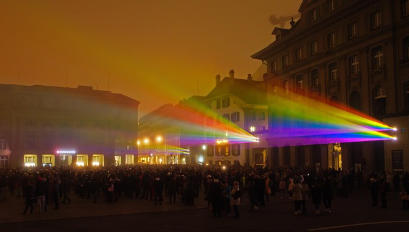
Many people are easy to confuse laser lights with ordinary LED lights and spotlights, but in fact, they have essential differences in principle, performance and effect. In terms of principle, laser lights produce monochromatic and directional beams through stimulated emission, while ordinary lights produce polychromatic and divergent light by heating filaments with electric current or exciting LED chips. In terms of performance, laser lights have extremely strong monochromaticity, pure color without impurities, small beam divergence angle, and projection distance up to hundreds of meters; ordinary lights have messy colors, fast beam divergence, and the brightness is greatly attenuated after long-distance projection. In terms of effect, laser lights can achieve dynamic effects such as beam cutting, light and shadow rotation, and pattern projection, with strong visual impact; ordinary lights are mainly used for lighting or basic decoration, with limited dynamic effects. In terms of application, laser lights are mostly used for stage performances, outdoor lighting, scientific research and detection; ordinary lights are mostly used for daily lighting and indoor decoration. Mastering these differences can help you quickly judge which kind of lighting equipment to choose in different scenarios.